Author
Published
Q With 58% of consumers using voice search for local businesses and 71% preferring speaking over typing, websites that don’t “talk” risk being invisible. Voice queries are longer, conversational, and often local
Demanding new strategies like FAQ-based content, schema markup, and conversational UX. Businesses embracing voice now gain a lasting edge as search behavior shifts permanently.
The Voice Revolution is Here
Voice searches are three times longer than typed queries because people naturally speak in complete sentences. Instead of typing "Italian restaurant NYC," they ask "What's the best Italian restaurant near me that's open right now?" This fundamental difference changes everything about web design and content strategy. With voice commerce projected to reach $40 billion by 2026, businesses optimizing for voice now are capturing market share while competitors struggle to catch up.
“
If your website can’t answer like a human, it’s already losing to one that can. Voice isn’t the future—it’s the interface of now.
- Abdul Karim Rony
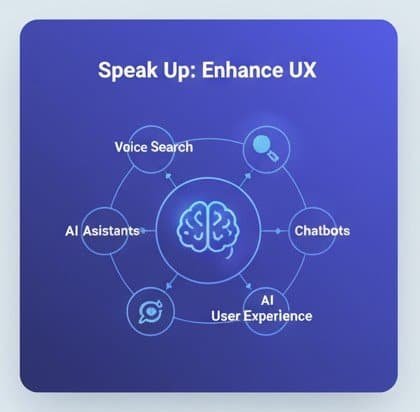

What Makes Voice Search Different
Traditional keyword research becomes inadequate for voice optimization. You need to think like your customers and anticipate their actual spoken questions. What problems are they solving? How would they naturally phrase requests when speaking to a human expert? Conversational UX transforms rigid website navigation into natural dialogue. Instead of clicking through multiple pages, users simply ask questions in their natural speaking voice. Modern AI can understand context, remember interactions, and provide personalized responses.
Implementation Strategy That Works
Start by creating comprehensive FAQ sections that match real customer language patterns. The questions must reflect how people actually speak, and answers need to be concise enough for voice assistants while remaining genuinely helpful. Schema markup becomes essential for voice search. FAQPage schema helps search engines understand your Q&A content, while LocalBusiness schema improves visibility for location-based queries. This structured data teaches search engines exactly when to surface your content for voice searches. Focus on featured snippets since voice assistants often read these as answers. Structure content with clear headings, provide direct answers to specific questions, and use natural language throughout your site.
Real Results from Voice Optimization
A regional restaurant chain saw a 340% increase in local search visibility after implementing voice search strategies. An e-commerce platform reduced cart abandonment by 45% with conversational product search. These results come from meeting customers' changing expectations, not just following technology trends. Voice search traffic growth indicates whether your conversational content strategy works. Featured snippet captures show how often search engines consider your content the best answer to specific questions.
Quick Implementation Guide
Week one involves auditing existing content for voice opportunities and researching conversational keywords your customers actually use. This research prevents optimizing for queries that sound right but don't reflect real behavior. Week two focuses on adding basic voice search functionality, implementing essential schema markup, and setting up analytics tracking. Start with high-impact pages like your homepage and main service pages rather than attempting complete website overhauls.
Common Challenges and Solutions
Privacy concerns require transparency about data usage and clear opt-out options. Device compatibility needs progressive enhancement ensuring voice features enhance rather than replace traditional navigation. Voice recognition accuracy improves with multiple recognition engines and audio confirmation. Content complexity feels overwhelming, but starting with crucial pages and expanding gradually makes the process manageable for any business.
The Competitive Advantage
Voice search optimization isn't just about keeping up with technology trends—it's about creating significant competitive advantages. Companies implementing conversational UX now are positioning themselves for future developments like multimodal AI, real-time translation, and voice biometrics. The businesses that thrive in the voice-first future understand this shift creates fundamentally better user experiences. When your website responds to natural human communication patterns, you're creating frictionless experiences that turn visitors into loyal customers.
Time to Act
The question isn't whether voice search will become important—it's whether you'll be ready when customers expect conversational interaction as standard rather than impressive. Voice optimization represents capturing market share from competitors still thinking in terms of traditional search behavior. Every day you delay implementation is another day potential customers might choose voice-optimized competitors over your business.
Tags :
Share :
latest Posts
Tags
Recent Blogs
Web Design
Web Development
Growth
Branding
Design Research
Wireframe
UI/UX Design
Search Engine Optimization
Prototype
Web Design
Web Development
Growth
Branding
Design Research
Wireframe
UI/UX Design
Search Engine Optimization
Prototype